Although its roots remained firmly planted in the buddy-comedy genre of previous decades, the offshoot emergence of the buddy-cop subgenre in the mid 1960’s began posing a challenge to post-war American society. Despite some tentative steps that decade, it wasn’t until the 1970’s that the buddy cop movie first began testing the limits of traditional social norms. It was in 1976, when the unthinkable happened; a woman became the buddy to the cop. While the foundations of the status quo were surely shaken to their roots by this and other ruptures, it wasn’t until almost a decade later that the genre really began to come into its own.
The 80’s proved to be the heyday of the buddy-cope genre, a time when the form truly crossed a threshold and, dare I say it, forever changed the face of American cinema. This is thanks to the release of Beverly Hills Cop in 1984, a film which pushed the envelope for African American characters in American cinema. That year, the floodgates weren’t just opened, they were swept from their very hinges. Buddy-Cop films became the leading edge of a social revolution, recasting conventional stereotypes with greater subtlety and nuance and daring us as individual citizens and as a nation to question long held assumptions about workplace integration and traditional ways of combining comedy and action. By the end of the ‘80’s, new and more daring buddy-cop entries arrived monthly, addressing complex social issues each time. Women buddy-cops reappeared, Soviet/American buddy cops, Japanese/American buddy cops, dog/human buddy cops (it’s own sub-sub-genre!) human/alien buddy cops, and even federal/municipal buddy cops. The 80’s was a cultural and political minefield, but Buddy Cops were ready for the challenge.
As the decade came to a close however, it seemed that the Buddy-Cop had reached its apex. It was a heady and inspiring time in America, daily forging a new nation of comedic multicultural camaraderie on the screen. Yet, at the same time the very maturity of this groundbreaking genre prevented it from fully remaking society in its own revolutionary image. The Buddy-Cop could apparently go no further. They may have been a symbol of all that was right with America, but the genre’s aesthetic complexity remained out of reach of the very beneficiaries of the new America that the buddy-cop was carving; children under ten.
In the early years of the 1990’s the genre was foundering, seemingly unable to carry through its promise of a greater society. In the bowels of Hollywood however, a chance encounter between two screen-powerhouses was brewing the formula of a new Buddy Cop that would very nearly achieve the status of its progenitors. With almost half a century of collective experience in the television industry, Henry Winkler and Burt Reynolds had a bone-deep understanding of the American intellect. But how do you translate all the complex socio-cultural commentary of Buddy Cops into an ageless cypher?
The answer turned out to be deceptively simple. By taking the touchstone of modern buddy cop cinema, Axel Foley, and effectively shrinking him into an 8 year old child, the genre became palatable to even the most sensitive of American tastes. While Foley had been a comedic loose-cannon, albeit a “good guy”, he was still a ‘black-man’ and this represented a traditional threat to whiteness that his goofy smile could never quite temper. All the imminent sexuality, violence and anger that black men represent in the white American mythos vanished and was replaced by a cute, well scrubbed and innocuous child that needed to be protected from his own naivete. With Burt Reynolds as the cigar-smoking excessive-force-using bitter old man rougue-Cop to this new incarnation of the Buddy, it was a miraculous reconception of paternalism that transcended metaphor entirely.
Cop and a Half is streaming right now on NutFlex, so go and see the the film that made the 90's the 'cool' decade.
Showing posts with label Stuff by The Goodkind. Show all posts
Monday, June 4, 2012
Monday, January 16, 2012
Canada is Just Plain Better at Music
It wasn’t until I started doing research for this article that I discovered how important the 1990’s were for Canadian music. During that glorious decade Canadians were producing some of the finest examples of contemporary soundings. While us U.S.ers were certainly churning out the hits, Canadians weren’t content merely to do the same thing well; they wanted to do it beauty. Canada took it from mere musicianship to pure artistry, honing each style into its philosophical essence as if distilling from an undisclosed variety of average grains only the finest of whiskys. Who can forget the saucy rock baladeering of Bryan Adams, who although he had a number of hits in the 80’s, managed Jesuslike to pinch off a second Billboard No. 1 hit in the early 90’s. It’s as if NAFTA resurrected his rock. There was of course also the reformulation of feminism into mass marketability which can be attributed at least in part to Canadian Sarah McLachlan, the songstress who stormed the adult contemporary field in 1993, taking her sweet grrl time to found Lilith Fair four years later. And then of course was perhaps the brightest of Canada's stars, North York native Snow who simultaneously pushed two genres, rap and reggae’ into previously uncharted territory and was also justly rewarded with a Recording Industry Association of Japan Best New Artist Award. The list goes on, but I think I’ve made my point. Texas may think they’re not to be messed with, but actions speak louder than words my friends, and Canada doesn’t answer to anybody, they already are their own country.
Still, there was one genre of music that dominated them all to define the 90’s.
In the United States a lot of people, at least in my generation, look back at the Clinton Era with a sense of shame or bemusement. Sure, we wore a lot of stupid clothes and listened to a lot of shitty music, but hey, at the time it was all optimism and progress right? For the first time in 12 years we had a president that actually seemed like he might be a genuine bro. Well anyway, he knew how to burn one and liked to jam. Economically we were more prosperous than any time in the last two decades and it looked like an awesome future was literally right at our fingertips. Leave it to white people to be all depressed and despondent when they have it so good. And yes, the Canadians once again showed us how it was really done. No I’m not talking about Saints and Sinners because nobody was listening to metal in the 90’s. I’m talking about the band that boiled the Grungy slacker essence of poor-little-rich-boy Anglo-Saxon misanthropy into a potent sauce of pure despondency. I’m talking about Grivo.
Formed in Toronto in late 1995, Grivo came on the Grunge scene pretty late, but man they were fucking apathetic. Taking their name from front man and vocalist Dan Grivo, the band featured former members of a number of unremarkable Canadian alt-rock bands, but the new combination was magical.
Unfortunately, as we know from far too much experience, a star that burns fifteen times as bright burns only 6.66 percent as long, and Grivo was no different.
Although the band had yet to record an album, by the following year they were already well known outside of their home country as one of the most nonplussed bands of the decade. It would be hard for me to describe it better than Wikipedia, so I won’t: Grivo became phenomenally “famous for their bleak lyrics, as well as a general indifference toward their audience, fame, and music.” Although rumor had it the band might be working somewhat half-assedly on some recordings, nothing ever materialized and it seemed that Grivo had all but disappeared and left virtually no record of their passing except for fragments of a single live performance in early '96.
Suddenly, as that same year was drawing to a close, Dan Grivo himself reappeared backed with an entirely new lineup. Making their debut on MTV, their very first music video went on to win the Best New Video in the Jangly Upbeat Pop category for that year. And for a second time in less than 2 years, Grivo again proved that lightning strikes lots of times in Canada. They just does things better than we do up there.
Thanks to TooYube user Badjackcutter for the rare archival footage.
Still, there was one genre of music that dominated them all to define the 90’s.
In the United States a lot of people, at least in my generation, look back at the Clinton Era with a sense of shame or bemusement. Sure, we wore a lot of stupid clothes and listened to a lot of shitty music, but hey, at the time it was all optimism and progress right? For the first time in 12 years we had a president that actually seemed like he might be a genuine bro. Well anyway, he knew how to burn one and liked to jam. Economically we were more prosperous than any time in the last two decades and it looked like an awesome future was literally right at our fingertips. Leave it to white people to be all depressed and despondent when they have it so good. And yes, the Canadians once again showed us how it was really done. No I’m not talking about Saints and Sinners because nobody was listening to metal in the 90’s. I’m talking about the band that boiled the Grungy slacker essence of poor-little-rich-boy Anglo-Saxon misanthropy into a potent sauce of pure despondency. I’m talking about Grivo.
Formed in Toronto in late 1995, Grivo came on the Grunge scene pretty late, but man they were fucking apathetic. Taking their name from front man and vocalist Dan Grivo, the band featured former members of a number of unremarkable Canadian alt-rock bands, but the new combination was magical.
Unfortunately, as we know from far too much experience, a star that burns fifteen times as bright burns only 6.66 percent as long, and Grivo was no different.
Although the band had yet to record an album, by the following year they were already well known outside of their home country as one of the most nonplussed bands of the decade. It would be hard for me to describe it better than Wikipedia, so I won’t: Grivo became phenomenally “famous for their bleak lyrics, as well as a general indifference toward their audience, fame, and music.” Although rumor had it the band might be working somewhat half-assedly on some recordings, nothing ever materialized and it seemed that Grivo had all but disappeared and left virtually no record of their passing except for fragments of a single live performance in early '96.Suddenly, as that same year was drawing to a close, Dan Grivo himself reappeared backed with an entirely new lineup. Making their debut on MTV, their very first music video went on to win the Best New Video in the Jangly Upbeat Pop category for that year. And for a second time in less than 2 years, Grivo again proved that lightning strikes lots of times in Canada. They just does things better than we do up there.
Thanks to TooYube user Badjackcutter for the rare archival footage.
Monday, December 5, 2011
Naked Aggression
I grew up in a small town in southern New Mexico where there was almost nothing to do. Small towns everywhere are like that, and like many social misfits in small towns across the United States (and elsewhere I imagine) I took solace in music that expressed my bitterness and misanthropy. With little else to do I often browsed the music catalogues at my friend's record shop looking for anything categorized under the genre "punk".
So it was that one day I stumbled across two bands in the "N" section and ordered their albums. The more significant of these (to me) was Naked Aggression's Bitter Youth. (Negative Approach was good too, but I really appreciate the radical political content of the former) Although there were some preceding split 7" and EP's Bitter Youth was the first of this Madison, WI anarcho-punk bands full-length LP's and sports a raw urgency to go along with it's radical politics. Plus it has what I think is one of the best punk-rock record covers of all time.
5 Years, a number of recordings later, and now based in California, they released Gut Wringing Machine. It was a further development of their sound and, contrary to the pattern of most punk bands, actually faster and more politically savvy than prior albums. Unfortunately it was also the tragic end of Naked Aggression for shortly after the release of Gut Wringing Machine the bands primary songwriter and accomplished guitarist, Phil Suchomel died. One would think this was the end for Naked Aggression, I did, but apparently not. As I was revisiting these albums yet again recently I did a little research and apparently after a number of years hiatus, the band reformed with some new crew and released some new material before going "dormant" again. We shall see...
So it was that one day I stumbled across two bands in the "N" section and ordered their albums. The more significant of these (to me) was Naked Aggression's Bitter Youth. (Negative Approach was good too, but I really appreciate the radical political content of the former) Although there were some preceding split 7" and EP's Bitter Youth was the first of this Madison, WI anarcho-punk bands full-length LP's and sports a raw urgency to go along with it's radical politics. Plus it has what I think is one of the best punk-rock record covers of all time.
5 Years, a number of recordings later, and now based in California, they released Gut Wringing Machine. It was a further development of their sound and, contrary to the pattern of most punk bands, actually faster and more politically savvy than prior albums. Unfortunately it was also the tragic end of Naked Aggression for shortly after the release of Gut Wringing Machine the bands primary songwriter and accomplished guitarist, Phil Suchomel died. One would think this was the end for Naked Aggression, I did, but apparently not. As I was revisiting these albums yet again recently I did a little research and apparently after a number of years hiatus, the band reformed with some new crew and released some new material before going "dormant" again. We shall see...
Buy Some Bitter Youth
The track listing is a little off on this, but the songs are there and easy to sort out.
Buy Some Gut Wringing Machine
Monday, November 14, 2011
Naked Lunch
I'm not a statistician, but based on the crude, haphazard and half-assed surveying that I've done, I'd be willing to guess that the average IllCon reader has some interest in William S. Burroughs and/or David Cronenberg. As far as my lazy research tells me, there is only one place where the two overlapped, 1991's Cronenberg directed film version of Naked Lunch. The director's early work in the 70's and 80's essentially founded a whole new way of looking at monster horror, namely in which the monster is within ourselves and hence, Burroughs seems a nice fit. Cronenberg has since branched out into new genres but the theme of internal transformation still runs through his work.
While it included many aspects of its titular source, the film Naked Lunch also included biographical material from Burroughs' life. Still, I don't think one necessarily has to be a fan of Burroughs' writing to appreciate the movie. As an exercise in oddity it can stand alone just fine. In truth however, despite my ascribed area of "expertise" here at IllCon I have no intention of talking about the film. I haven't seen it in over a decade. No, what I want to tell you about is the Naked Lunch soundtrack by Howard Shore. Shore got his start working with Cronenberg, and has scored almost all of the director's films (including Videodrome.) Obviously it's a partnership that works, and this Naked Lunch soundtrack is ample proof. Still, I'm not even here to talk to you about the soundtrack to Naked Lunch, merely to point out that it is awesome and encourage you to listen.
Buy yourself some Naked Lunch
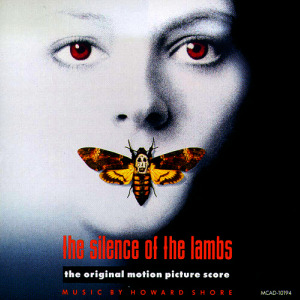
Lest you think that Howard Shore is some kind of one director pony however I offer this other awesome selection. In addition to the above, in the same year he scored the phenomenal psychological crime/horror Silence of the Lambs for director Johnathan Demme. (He also did some Twilight ST's, but whatever, gotta pay the bills right?)
Buy Yourself some Silence of the Lambs
Labels:
Downloads,
Horror,
Soundtrack,
Stuff by The Goodkind
Monday, October 24, 2011
Killarmy
I dont have to tell you what Wu-Tang did for Rap. Everyone has their own personal favorite member and/or spinoff group and I am no different. One of the ones that most people seem to miss also happens to be among my favorites is Killarmy. Besides my personal opinion on these albums, I'll let the great open-source arbiter of reality do the talking about Killarmy since that is where I would have gotten all of my information anyway.
Their 1997 debut album Silent Weapons for Quiet Wars has a lot going for it, including a bit of production by Rza. The majority of the album though is produced by 4th Element, but the sound still closely resembles that of the Clan with some different theme to the lyrics.
Dirty Weaponry was my intro to Killarmy and to the idea of Nation of Gods and Earths ideology and Black Islamic Hip-Hop. Coincidentally it's also in Dirty Weaponry that the group displays their own sound, different from, but still associated with the Wu Family. Dirty Weaponry samples a number of old war and science fiction movies including Turkey Shoot. The last song has some bizarre vocal sample that I still find creepy every time I hear it. I'll send you a buck if you can tell me what it's from.
Like lots of groups, Hip-Hop and otherwise, Killarmy's last album is probably their weakest. That does not mean that they went out with a whimper. Merely, it means that there is nothing really innovative and new about Fear Love and War, and in that sense it feels like a continuation of Dirty Weaponry which is fine considering that was a great record. While a bit less militant, it still features the strong production from 4th Element and Mathematics that made the previous albums so damn good.
Their 1997 debut album Silent Weapons for Quiet Wars has a lot going for it, including a bit of production by Rza. The majority of the album though is produced by 4th Element, but the sound still closely resembles that of the Clan with some different theme to the lyrics.
Buy some Silent Weapons
Dirty Weaponry was my intro to Killarmy and to the idea of Nation of Gods and Earths ideology and Black Islamic Hip-Hop. Coincidentally it's also in Dirty Weaponry that the group displays their own sound, different from, but still associated with the Wu Family. Dirty Weaponry samples a number of old war and science fiction movies including Turkey Shoot. The last song has some bizarre vocal sample that I still find creepy every time I hear it. I'll send you a buck if you can tell me what it's from.
Buy some Dirty Weaponry
Like lots of groups, Hip-Hop and otherwise, Killarmy's last album is probably their weakest. That does not mean that they went out with a whimper. Merely, it means that there is nothing really innovative and new about Fear Love and War, and in that sense it feels like a continuation of Dirty Weaponry which is fine considering that was a great record. While a bit less militant, it still features the strong production from 4th Element and Mathematics that made the previous albums so damn good.
Buy some Fear Love and War
Wednesday, October 12, 2011
Kung Fu
Whether or not you are familiar with any of the films, you're bound to appreciate this collection of classic kung-fu movie themes from the Shaw Brothers Studio. The action, tension and high-drama of the genre come out full force in the music with kettle drums and armies of brass. It may not be quite the same, but I almost feel as if I'm watching the movies again (or for the first time).
If you're not a kung-fu fan, I suspect you will be after THIS. Many of these films are more than just martial arts, but social commentary and humor, sometimes pure exploitation and I can't recommend enough that you check them out.
Labels:
chinese,
Downloads,
Soundtrack,
Stuff by The Goodkind
Sunday, October 9, 2011
Regrets, I've Had A Few
Alas it's true, as Cobras has gently pointed out I have been slacking on my posts here at the Trap. To be perfectly honest I've watched my fellow Contraptionists post various rambling rants about music and other things and been inspired, for a few minutes.
Truth is, my primary interest is film and I often lack the berzerker's determination displayed by folks like our Dear Leader to research and elucidate artists and albums. As a result I have a number of half finished ideas which never made it into the kiln.
If for no other reason than to prove Cobras wrong for at least a few minutes, I'll post some of the music that's been waiting on deck starting with this old Blues gem, Blind Willie Johnson.
Perhaps you Hesh-monkeys will appreciate Blind Willie for his brutally raspy singing voice; the first cookie monster vocals? Satanists might also appreciate his intense fondness for god's only begotten son as being somewhat ironic considering the impoverished and somewhat apocalyptic contexts of his music. Johnson, who like Skip James, also worked as a preacher for many years, wrote songs about death, disease, tragedy, sorrow and Jesus which stack up favorably to anything with corpse-paint.
Truth is, my primary interest is film and I often lack the berzerker's determination displayed by folks like our Dear Leader to research and elucidate artists and albums. As a result I have a number of half finished ideas which never made it into the kiln.
If for no other reason than to prove Cobras wrong for at least a few minutes, I'll post some of the music that's been waiting on deck starting with this old Blues gem, Blind Willie Johnson.
Perhaps you Hesh-monkeys will appreciate Blind Willie for his brutally raspy singing voice; the first cookie monster vocals? Satanists might also appreciate his intense fondness for god's only begotten son as being somewhat ironic considering the impoverished and somewhat apocalyptic contexts of his music. Johnson, who like Skip James, also worked as a preacher for many years, wrote songs about death, disease, tragedy, sorrow and Jesus which stack up favorably to anything with corpse-paint.
Please, enjoy!
Tuesday, June 7, 2011
Naming Your Girl Band: 1980's Edition
It’s the 80’s and let’s face it, thanks to the groundbreaking stateswomanship of First Lady Nancy Reagan, you chicks are going places you’ve never gone before. But if you're going to do all the stuff that dudes do, you had better be careful. Not all that long ago a chick playing music might have been punished by drowning in the Tigris, but we can't do that anymore so I’m going to take this opportunity to give you a little advice in coming up with a good name for your own girl band. As you probably didn't know, the name of a band is almost more important than what you actually play. You could probably come up with a totally rad band name and totally suck, but people would still come to your shows. The reason is that words are associated with images and ideas in people’s heads, they can generate all sorts of meaning, both good and bad whether or not it is explicitly there in the arrangement of letters. That’s why it’s crucially important to be strategic with your girl band name choices.
First of all, since you’re treading on territory that has until recently totally been the sacrosanct turf of dudes, be careful not to point this out. That’s totally like the fox advertising to the farmer that he’s all up in the chicken coop, it’s threatening and likely to backfire. Go for something that reassures the male need for dominance and control, a word that suggests vulnerability and a need to be taken care of. Innocence and weakness in women totally makes dudes feel like they’re strong and in control, like their power isn’t being threatened. Diaper Rash’s name is totally loaded with subtle meaning and is a primo example of excellent girl band nameage. The word “diaper” brings up both infantile helplessness AND of course babies, both of which reassure men that this girl band is not challenging established gender roles, even though they rock.
Second, and closely related to the first point about innocence is sex. Dudes are going to be thinking about boning you whether you like it or not, that’s what dudes do, so it’s important to use this to your advantage. Advertising your sexuality is a good way to get attention, using words that suggest it without explicitly saying it is a lot like wearing a lexical halter-top. Vicious Lips is a rad example of this principle because the word “lips” brings up lots of wet and warm thoughts that dudes totally dig. Cherry Bomb is another excellent girl band name because “cherry” suggests not only sex but, as above, innocence and inexperience which goes a long way toward reassuring a dude that he will remain dominant. When sex and power are firmly in their grasp, dudes will rock out to your girl band too.
Now that you’ve gotten all of this down, I want to bring up what is perhaps most important point of all. You may have noticed that I only addressed half of each of the example girl band names above. The other half of those names are just as important in ensuring the success of each of these girl bands, as it will in yours. After cooking up all these ideas in dudes heads we still have to remember that even though they like the sex and innocence, you’re still usurping their place on the stage. Your girl band is, if not literally, figuratively in competition with their regular band. Your lack of a cock is subconsciously threatening to men, it reminds them that theirs could get cut off. It’s important to remind dudes that you’re still playing the same game, you’re not changing the rules or anything, that your “power” is not really a threat to theirs. This unspoken threat of emasculation can be easily countered by the use of man imagery and wordery. Thus “rash”, “vicious” and “bomb” are like dude symbols; violence, power and the military remind us that everything is OK. They say to people, without actually saying anything of course, “the status quo will remain unchallenged chicks and dudes in the audience!” Think about it, if your band's name was Vicious Rash Bomb, you would probably be dudes in a regular band. Conversely if you were called Cherry Diaper Lips, no dudes would ever come to your girl band’s shows. A careful combination of both sex and reassurance is the best way to make it as a chick in this topsy turvy business we dudes call music.
![]() |
| Cherry Bomb from 1986's Howard the Duck |
![]() |
| Diaper Rash from 1984's Hardbodies |
![]() |
| Vicious Lips from the 1988 film of the same name. |
![]() |
| If you look closely you can see dudes rocking out to girl band Diaper Rash (played by an early incarnation of Vixen) |
![]() |
| Totally vicious' and yet, nonthreatening. |
![]() |
Labels:
80's,
Awesome Band Names,
Rock,
Stuff by The Goodkind
Tuesday, April 26, 2011
Guilty Pleasures Week - The Goodkind
Booze has always been just a little more important to me than music, and I have always been in a pretty low income bracket, so often, my least listened to albums got traded in for beer money. Since I no longer possess some of the more shameful items of my audio-past, things like Belly's first album or some crazy shit from the guy who used to stock the cigarette machine at my job in Albuquerque, I'll give you this.
I have never been more castigated or verbally abused for anything (even the Belly) as much as for my appreciation of Mariachi. My ex-girlfriend would yell in anger at me for putting it on. At my own birthday party, at which I cooked all the Mexican food that they were eating, "friends" asked me to turn it off. I have only this to say: Chinga sus malditas madres cabrones.
Here is what is still my favorite Mariachi album from actor/singer Fernando Fernandez who was active in the post-World War II period.
I have never been more castigated or verbally abused for anything (even the Belly) as much as for my appreciation of Mariachi. My ex-girlfriend would yell in anger at me for putting it on. At my own birthday party, at which I cooked all the Mexican food that they were eating, "friends" asked me to turn it off. I have only this to say: Chinga sus malditas madres cabrones.
Here is what is still my favorite Mariachi album from actor/singer Fernando Fernandez who was active in the post-World War II period.
Fernando Fernandez 100 Anos de Musica disco 1
(sorry, these files are in .wma format, that said I have the other disc too if you really want it)
Sunday, February 20, 2011
I Would Rather Be the Devil - Skip James
There is something profoundly true but not immediately obvious in Kurt Cobain's lyric "I miss the comfort in being sad" (Frances Farmer Will Have Her Revenge on Seattle). The sense of being victimized, of being the wronged party is very validating because it is self-vindicating. But the sadness of commercial pop-music stems from the narcissistic self-pity of a people who are used to getting what they want, an expression of loss from the privileged. I don't mean to discredit anyone's feelings here, but for more profound and immediate content, I find that there is no better place to look than the Blues, especially from the Pre-War period (after all, it is called the Great Depression) before the genre became commercially viable.
I'll save you the long history of Skip James because I'm not a music historian and I would just be repeating a lot of what you can find at the Skip Wiki, but here is an abridged version to pique your interest. Even non-fans of the Blues have frequently heard of Robert Johnson whom, while amazing to hear and incredibly influential, was predated by Skip. Johnson even got some of his licks from his predecessor, adapting some of the latter's songs for his own use.
These early recordings are entirely unique. Skip plays both guitar and piano and sings in a voice almost unnatural, unlike anything you've ever heard. Easily my top Pre-War Blues album of all time.
The Complete Early Recordings
Like many of the early bluesmen, Skip recorded a few songs when he was young and then disappeared for several decades until he was "re-discovered" in the 1960's by a bunch of white kids who were making some racket called rock "music". Although he generally disdained attention and publicity, he was in financial need, and recorded a number of albums in the late 60's just before his death. While cleaner production-wise for obvious reasons, they feature the same trademark Skip sound as before, only with a little more God thrown in.
Devil Got My Woman
1968
Studio Sessions
1967
Like many of the early bluesmen, Skip recorded a few songs when he was young and then disappeared for several decades until he was "re-discovered" in the 1960's by a bunch of white kids who were making some racket called rock "music". Although he generally disdained attention and publicity, he was in financial need, and recorded a number of albums in the late 60's just before his death. While cleaner production-wise for obvious reasons, they feature the same trademark Skip sound as before, only with a little more God thrown in.
Devil Got My Woman
1968
Studio Sessions
1967
Between 1962 and 1966 as Skip was dying of cancer he toured Europe with the American Folk Blues Festival to play shows with other now legendary Blues and Jazz performers. A number of the performances in Germany have been compiled onto a DVD set which features some amazing performances both on and "off" stage by Skip and other greats. Above Skip performs for Howlin' Wolf (far right foreground) and Son House among others. Below is an onstage performance of Crow Jane.
You're welcome.
Monday, February 7, 2011
Artistic Imperialism and the Leningrad Cowboys
Let us take a look at the film that introduced the world to the Leningrad Cowboys, a product of the fertile mind of Finnish film director Aki Kaurismaki. The tale of Leningrad Cowboys (as far as this film is concerned) is a schoolyard parable of cliques, acceptance and self-image writ large upon the history of Western imperialism. “The East” was defined as an oppositional category to “The West”; an either/or dichotomy. Thus, in the minds of those people at the center of the world1 (y’know, the Medi-terranean) everything to their east, became The East. And of course, the name stuck, largely because of an accident of geography2 which, coupled with this ideology of dichotomy easily justified imperialism. This whole bi-polar categorization scheme makes it really easy to qualify things because the “in” group gets to categorize who does or does not belong, those that do not can do nothing about it except to forge their own path.
Are we, you and I dear reader,3 as a people of predominantly western European origin predestined by our cultural heritage to continue this trend? Will we always be compelled as some would contend, by our very genetic composition to separate and subjugate? To exploit and enslave other members of our species,4 to force their conformity or enact their
rejection? I would argue that this is not the case, that the urge to dominate is a learned social behavior, not a “natural” one. As you may recall, once again conjuring memories of your early schooling, rejection and acceptance of one’s peers is a really a personal choice rather than acquiescence to justificatory pseudoscientifical Social Darwinist dogma.5
Consider this conveniently abridged history of Finland; Raided by Vikings from Sweden, invaded by the armies of Imperial Russia, attacked by the armies of Soviet Russia, and presently, shackled by the crumbling economies of the Euro-Zone and through it all gripped within the Arctic vise. Finland then is a land familiar with tyranny. Our heroes are of course named after a city in Russia, a city named after its founder, the first Russian imperialist Peter The Great. The Leningrad Cowboys (L.C. from here on out), despite their namesake and roots in the wellspring of Arctic imperialism, exemplify the rejection of social categorization and conformity. Their divergence from the expected is suggested in the prominent hairstyles they sport. Hairstyles which evoke the uniquely sculpted cranium of Oblio, the little boy in 1971’s television film The Point!6
It begins in the first scene when the L.C. audition for a local promoter. He rejects them, suggesting they head to America where “they will buy anything”. In the States they attempt to establish themselves, but again are quickly rejected. This time they are told that they might be more successful if they play something called “rock and roll”. This popular style of music is of course little more than a black hole of trite monotonous garbage, assembled from the occupied territories of a musical style which was co-opted and repackaged for the masses from the tragicomic and cathartic music of a people oppressed and enslaved by European and American imperialism. But, naïve optimists that they are, the L.C. have no idea that they have fallen again into the cycle of imperialism. Conform or perish, if you’re not with us, you’re against us, make a choice.
Their last great challenge comes from within, and this is perhaps most telling for it represents a struggle with the self; man vs. himself. During the course of their journey it has become increasingly obvious that the manager of the L.C. has been taking advantage of the band, drinking up what little income they have in cheap American lager and we later learn, not even feeding the band. Let us be honest with ourselves. There is no artist so stoic as to never even consider the idea of selling out, even for just a minute, to make it all a little easier. After all, s/he has struggled so hard to be true, s/he deserves a little respite, a little recognition, a little love.
Yet despite these odds our exemplar heroes resist the weary temptation and persist, and they discover at the end of their great and harrowing struggle the only truly valuable reward that awaits any artist, be they musician or otherwise; fulfillment. It is in Mexico, at a wedding where our hardy Finns finally find peace and fulfillment, a receptive and appreciative audience, and the freedom to pursue their art without pressure to conform to some predetermined marketable standard. It is fitting that this moment shatters any notions of inherent or “natural” separation or otherness between different peoples or cultures. It rejects the idea that hierarchy and conformity are necessary for survival.
In the modern world, the post sword and castle world, communication is the leading edge of empire. The ability and extent to which one communicates one’s thoughts, ideas and agenda, whether overt or covert often determines the social power one wields.7 It takes a unique and flexible type of aesthetic and moral integrity to maintain a personal standard against the relentless thundering cataclysm of capital motivated music (or any other art for that matter). In other words; it’s easy to sell out, the rewards are many. Not so to retain ones integrity.
Now, having said all of that I’d like you to take a look at this.
-S.G.
Thanks for reading, see more obtuse film criticism at my Trappy nominated blog Lost Video Archive.
---------Notes---------
1. I.e. the Greek and Roman philosophical/political traditions from whom modern "Western" culture has inherited much of its worldview.
2. According to some people, there are others who disagree, but they’re not like us.
3. I feel safe saying this because of demographic statistics and because those of you who do not fit within my gross overgeneralization are being complimented in a roundabout way on the accident of your birth.
4. And, as some folks with special dietary preferences would point out in reference to the modern practice of factory agriculture; other species as well.
5. And Darwin’s was only one of several theories on evolution. Peter Kropotkin proposed a theory that relied on cooperation rather than Darwin’s competition.
6. An animated film based on the Harry Nilsson album of the same name in which the outcast boy Oblio had a round head, while everyone else had pointed heads. Somewhat the opposite of the Leningrad Cowboys, but you get my point.
7. Consider that in the current ongoing struggles in North Africa, opposition frequently communicates between themselves and the rest of the world through social media. The Mubarak in Egypt regime as we now know, shut down internet access in the country in order to prevent such communication. If no one hears your voice, are you actually speaking, do you even exist? We've long been aware that in U.S. elections the candidate who spends the most on advertising is the most likely to win. Did you know that there were 12 third party candidates in the 2008 presidential election? The numbers tell the story.
Are we, you and I dear reader,3 as a people of predominantly western European origin predestined by our cultural heritage to continue this trend? Will we always be compelled as some would contend, by our very genetic composition to separate and subjugate? To exploit and enslave other members of our species,4 to force their conformity or enact their![]() |
| Not Darwin |
![]() |
| Round. |
It begins in the first scene when the L.C. audition for a local promoter. He rejects them, suggesting they head to America where “they will buy anything”. In the States they attempt to establish themselves, but again are quickly rejected. This time they are told that they might be more successful if they play something called “rock and roll”. This popular style of music is of course little more than a black hole of trite monotonous garbage, assembled from the occupied territories of a musical style which was co-opted and repackaged for the masses from the tragicomic and cathartic music of a people oppressed and enslaved by European and American imperialism. But, naïve optimists that they are, the L.C. have no idea that they have fallen again into the cycle of imperialism. Conform or perish, if you’re not with us, you’re against us, make a choice.
Their last great challenge comes from within, and this is perhaps most telling for it represents a struggle with the self; man vs. himself. During the course of their journey it has become increasingly obvious that the manager of the L.C. has been taking advantage of the band, drinking up what little income they have in cheap American lager and we later learn, not even feeding the band. Let us be honest with ourselves. There is no artist so stoic as to never even consider the idea of selling out, even for just a minute, to make it all a little easier. After all, s/he has struggled so hard to be true, s/he deserves a little respite, a little recognition, a little love.
Yet despite these odds our exemplar heroes resist the weary temptation and persist, and they discover at the end of their great and harrowing struggle the only truly valuable reward that awaits any artist, be they musician or otherwise; fulfillment. It is in Mexico, at a wedding where our hardy Finns finally find peace and fulfillment, a receptive and appreciative audience, and the freedom to pursue their art without pressure to conform to some predetermined marketable standard. It is fitting that this moment shatters any notions of inherent or “natural” separation or otherness between different peoples or cultures. It rejects the idea that hierarchy and conformity are necessary for survival.
In the modern world, the post sword and castle world, communication is the leading edge of empire. The ability and extent to which one communicates one’s thoughts, ideas and agenda, whether overt or covert often determines the social power one wields.7 It takes a unique and flexible type of aesthetic and moral integrity to maintain a personal standard against the relentless thundering cataclysm of capital motivated music (or any other art for that matter). In other words; it’s easy to sell out, the rewards are many. Not so to retain ones integrity.
Now, having said all of that I’d like you to take a look at this.
-S.G.
Thanks for reading, see more obtuse film criticism at my Trappy nominated blog Lost Video Archive.
---------Notes---------
1. I.e. the Greek and Roman philosophical/political traditions from whom modern "Western" culture has inherited much of its worldview.
2. According to some people, there are others who disagree, but they’re not like us.
3. I feel safe saying this because of demographic statistics and because those of you who do not fit within my gross overgeneralization are being complimented in a roundabout way on the accident of your birth.
4. And, as some folks with special dietary preferences would point out in reference to the modern practice of factory agriculture; other species as well.
5. And Darwin’s was only one of several theories on evolution. Peter Kropotkin proposed a theory that relied on cooperation rather than Darwin’s competition.
6. An animated film based on the Harry Nilsson album of the same name in which the outcast boy Oblio had a round head, while everyone else had pointed heads. Somewhat the opposite of the Leningrad Cowboys, but you get my point.
7. Consider that in the current ongoing struggles in North Africa, opposition frequently communicates between themselves and the rest of the world through social media. The Mubarak in Egypt regime as we now know, shut down internet access in the country in order to prevent such communication. If no one hears your voice, are you actually speaking, do you even exist? We've long been aware that in U.S. elections the candidate who spends the most on advertising is the most likely to win. Did you know that there were 12 third party candidates in the 2008 presidential election? The numbers tell the story.
Tuesday, November 2, 2010
MOLEHILL - S-T/Comfort Measured In Razor Lines
I know you're all suffering through a post costumbrage depressive guilt phase but I encourage you to turn once again to your profound reservoir of misanthropy for a dose of go-juice.
This former Birmingham, Alabama band came through my former home city of Albuquerque 10 or 11 years ago and played in the basement of my house. For some reason not many people came, but these guys ripped it up nonetheless despite the drummers severe case of influenza. The singer had broken his mike the previous show and had to borrow mine. He also broke that one. On his head.
Anyway, some of you might have heard of a little band out of Louisiana that profoundly disliked deities. They released a few albums and then disappeared but apparently had a little influence on these fellows to the northeast. When they left ME with this album it was an untitled EP with only 6 songs, but whatta ya know, it was released a year later with the same songs under the name Comfort Measured In Razor Lines.
This former Birmingham, Alabama band came through my former home city of Albuquerque 10 or 11 years ago and played in the basement of my house. For some reason not many people came, but these guys ripped it up nonetheless despite the drummers severe case of influenza. The singer had broken his mike the previous show and had to borrow mine. He also broke that one. On his head.
Anyway, some of you might have heard of a little band out of Louisiana that profoundly disliked deities. They released a few albums and then disappeared but apparently had a little influence on these fellows to the northeast. When they left ME with this album it was an untitled EP with only 6 songs, but whatta ya know, it was released a year later with the same songs under the name Comfort Measured In Razor Lines.
1. Dying Like Sisiters
2. Balrac
3. Sleeping Through My Funeral
4.Greying Whore
5. Eye On
6. 24 Hour Mercy Plea
Hear it HERE
Not to be confused with this Molehill.
These nerdy lookin' metal-redneck-lumberjacks also released 3 songs on the compilation Crushers, Killers Destroyers! which Shelby posted HERE, and on an LP called 1000 Years Regret which appears to be entirely unobtainable.
Some of the songs on the LP can be heard on the Molehill Myspace HERE.
Get southern, get sludgy.
Tuesday, October 12, 2010
From The Muddy Banks of the Tigris
Oh damn. I've been vacillating all week between posting something hilariously satanic, something thuggish or something extremely lo-fi. For some reason I chose none of the above.
Yes, yes indeed. I won't hesitate to tell you that this CD is nothing less than ethnic. A lot of times the word "pop" suggests to us westerners who are intimately familiar with the term in all its commercial applications, an universal saccharine vapidity.
This compilation does not conform to any preconceived notions of what "popular" music is to the Western ear. I tried to play it at a party and it was totally misunderstood and heckled into submission. Perhaps for you as for me, that is a signal of encouragement (I followed it with mariachi). But then again, I'm a misanthrope. Oh all the political tangents my mind turns to just looking at the word Iraq. I won't go there in this forum.
Listen rapt to this item from Sublime Frequencies... then go get some more.
Monday, September 20, 2010
Come See The Elephant
What made the Vietnam War such a fucking brain twister for the U.S.? Why did it haunt the public dialogue for so long and require such a bloodsoaked and violent catharsis? I would argue that it was/is its historical and cultural context. Simply, it was a major moment of rupture in the U.S. cultural fabric at a time when social norms and the status quo were seriously challenged at home by the Civil Rights Movement (which it is often forgotten included Native American and Chicano Movements), resurgent Feminism and the beginning of a public Gay Rights Movement among other economic and domestic upheavals (think hippie kids and duck-n-cover parents). It is no surprise then that to many it may have seemed as if U.S. American society was tearing itself apart.
As a military conflict, the Vietnam War was little different from prior wars in its simplest incarnation, that of people killing people, destruction and death in the name of ideological righteousness. In Vietnam itself, the psychotropic perception of the war was accentuated by a juxtaposition of forces that could hardly be more polar. The U.S. was far more technologically and tactically complex, but high-tech couldn’t cope in a primitive subtropical jungle. We were physically far better armed, but ideologically fragmented and increasingly ideologically divided against an adversary that if not politically uniform, was thoroughly united in its commitment to independence.
And as the status quo was being profoundly shaken at home, images of the carnage and chaos in Vietnam were daily being broadcast side by side on the evening news. It is really no surprise then that the cultural memory of the “Vietnam Era” in the U.S. is one of unreality and instability. Particularly for those of us who are too young to have any personal memories of it, much of this cultural memory is dispensed in the form of film. Much of U.S. cinema regarding Vietnam is centered on the individual experience of unreality and it’s transformative effect. Two of the most profound examples of this unreality and transformation discourse are Francis Coppola’s Apocalypse Now, and Stanley Kubrick’s Full Metal Jacket.
Both films are in fact based on novels; Coppola’s on Joseph Conrad’s Heart of Darkness, and Kubrick’s on Gustav Hasford’s Short Timers, and while they should not be mistaken for realism, they have an undeniable authenticity which solidifies their status as cultural documents. I would argue that the greater responsibility lies with writer Michael Herr who co-scripted both films. Herr was a correspondent for Esquire magazine between 1967 and ’69 which he spent in Vietnam, and his excellent book Dispatches is a record of that experience. Many of the scenes and surreal dialogue in both films are taken directly from Herr’s account which captures the cognitive dissonance that has contributed largely to our “memory” of the Vietnam experience. This is largely due to the fact that it was one of the first popular books to deal with the subject, and its immediate successor, Apocalypse Now, one of the first popular films to do so. As a result much of the Vietnam related media that followed took its cue - at least in part - from these two sources.
The final factor making these two films so iconic, and what this post is in the end all about, (a-la IllCon) is the music. Both use a combination of historically contemporary pop music and original score to create yet another juxtaposition of familiarity and mutation that mirrors the narrative. The director’s father Carmine Coppola takes credit for the original music in Apocalypse Now. Although he worked as a professional musician, this is perhaps his best known film work and it is good stuff. HEAR IT HERE
Kubrick’s Daughter Vivian Kubrick (as "Abigail Mead") scored Full Metal Jacket, one of only three films to her credit. HEAR IT HERE Coppola’s score works best in conjunction with the rest of the music, partly because the film’s structure is much more subtle and prolonged than Full Metal Jacket, something reflected in Mead’s compositions which I think work well within the film, but in a strictly aural context stand out more due to their darker tone.
As you read this I am actually in the country of Vietnam, in part trying to divest myself of the American cultural memory of that place by seeing it outside of "our" context. My conception of Vietnam was so colored by all the history of the war years that I had read, and by these films, that when I was doing research into the country now, I was shocked when I saw modern pictures of Ho Chi Minh City (Saigon) that dwarfed my home Seattle. It’s a reminder that the world outside us keeps moving no matter how important and immediate our own experience seems.
The title of this post refers to the anticipation of a new experience, as in, "seeing the elephant", a term invoked by new recruits in numerous U.S. wars in reference to experiencing combat and "real" war for the first time.
As a military conflict, the Vietnam War was little different from prior wars in its simplest incarnation, that of people killing people, destruction and death in the name of ideological righteousness. In Vietnam itself, the psychotropic perception of the war was accentuated by a juxtaposition of forces that could hardly be more polar. The U.S. was far more technologically and tactically complex, but high-tech couldn’t cope in a primitive subtropical jungle. We were physically far better armed, but ideologically fragmented and increasingly ideologically divided against an adversary that if not politically uniform, was thoroughly united in its commitment to independence.
And as the status quo was being profoundly shaken at home, images of the carnage and chaos in Vietnam were daily being broadcast side by side on the evening news. It is really no surprise then that the cultural memory of the “Vietnam Era” in the U.S. is one of unreality and instability. Particularly for those of us who are too young to have any personal memories of it, much of this cultural memory is dispensed in the form of film. Much of U.S. cinema regarding Vietnam is centered on the individual experience of unreality and it’s transformative effect. Two of the most profound examples of this unreality and transformation discourse are Francis Coppola’s Apocalypse Now, and Stanley Kubrick’s Full Metal Jacket.
Both films are in fact based on novels; Coppola’s on Joseph Conrad’s Heart of Darkness, and Kubrick’s on Gustav Hasford’s Short Timers, and while they should not be mistaken for realism, they have an undeniable authenticity which solidifies their status as cultural documents. I would argue that the greater responsibility lies with writer Michael Herr who co-scripted both films. Herr was a correspondent for Esquire magazine between 1967 and ’69 which he spent in Vietnam, and his excellent book Dispatches is a record of that experience. Many of the scenes and surreal dialogue in both films are taken directly from Herr’s account which captures the cognitive dissonance that has contributed largely to our “memory” of the Vietnam experience. This is largely due to the fact that it was one of the first popular books to deal with the subject, and its immediate successor, Apocalypse Now, one of the first popular films to do so. As a result much of the Vietnam related media that followed took its cue - at least in part - from these two sources.
The final factor making these two films so iconic, and what this post is in the end all about, (a-la IllCon) is the music. Both use a combination of historically contemporary pop music and original score to create yet another juxtaposition of familiarity and mutation that mirrors the narrative. The director’s father Carmine Coppola takes credit for the original music in Apocalypse Now. Although he worked as a professional musician, this is perhaps his best known film work and it is good stuff. HEAR IT HERE
Kubrick’s Daughter Vivian Kubrick (as "Abigail Mead") scored Full Metal Jacket, one of only three films to her credit. HEAR IT HERE Coppola’s score works best in conjunction with the rest of the music, partly because the film’s structure is much more subtle and prolonged than Full Metal Jacket, something reflected in Mead’s compositions which I think work well within the film, but in a strictly aural context stand out more due to their darker tone.
As you read this I am actually in the country of Vietnam, in part trying to divest myself of the American cultural memory of that place by seeing it outside of "our" context. My conception of Vietnam was so colored by all the history of the war years that I had read, and by these films, that when I was doing research into the country now, I was shocked when I saw modern pictures of Ho Chi Minh City (Saigon) that dwarfed my home Seattle. It’s a reminder that the world outside us keeps moving no matter how important and immediate our own experience seems.
The title of this post refers to the anticipation of a new experience, as in, "seeing the elephant", a term invoked by new recruits in numerous U.S. wars in reference to experiencing combat and "real" war for the first time.
Monday, August 9, 2010
MAJORITY RULE
I don't know much about Washington D.C. band Majority Rule except that a band I was in a decade ago played with them in the basement of an all ages collective one Sunday night in St. Louis Missouri. The crowd in attendance consisted of the other bands that played that night, and since no one made any money we just traded perephenalia. The result was this Self Titled demo from 2000.
I'm not sure what sort of generic constraints one would (or should) place on Majority Rule. I don't have much interest in the nuances of classification anyway, except from a sociological standpoint.On their Myspace they call themselves "punk", I think it's too spooky, emotional and cathartic for that label exclusively. So years after that rainy night in St. Louis was pierced by screaming and grinding noises (emotional and cathartic!) I found myself still enamored with this band and decided to find out if they had released something else. I wound up with this 2003 full length Emergency Numbers. (the second of three albums)
Sadly for you it looks like Majority Rule broke up in 2006 so you can't see 'em live anymore, but you can buy their other albums right there on their MySpace page, which you should.
I'm not sure what sort of generic constraints one would (or should) place on Majority Rule. I don't have much interest in the nuances of classification anyway, except from a sociological standpoint.On their Myspace they call themselves "punk", I think it's too spooky, emotional and cathartic for that label exclusively. So years after that rainy night in St. Louis was pierced by screaming and grinding noises (emotional and cathartic!) I found myself still enamored with this band and decided to find out if they had released something else. I wound up with this 2003 full length Emergency Numbers. (the second of three albums)
Sadly for you it looks like Majority Rule broke up in 2006 so you can't see 'em live anymore, but you can buy their other albums right there on their MySpace page, which you should.
Monday, August 2, 2010
The Hidden Agenda Behind Rock n' Roll
To continue my series on fictional film bands I present a confrontation I had with my childhood and The Clowns, the alleged musical protagonists of the 1982 film Terror on Tour.
As a child I was exposed to a fair amount of metal by a couple of older friends (the teenaged brothers of the babysitter!) Nevertheless, at the age of eight a person is, understandably, susceptible to suggestion, and I was no exception. For some people, the unquestionable evil of metal was quite threatening, even satanic, and it would surely induce me, they were convinced, to murder my parents and boil their severed heads in urine if I listened to its seductive riffage. KISS as many of you may remember was particularly vilified, and coupled with their visual presentation these rumors of “evil” sank their hooks into my soft brain. It’s one thing to hear some music, and another to directly associate that music with a particular source. Some years later when I finally heard the sounds of KISS and made the cognitive association with their physical appearance I was dumbfounded. There was no evil, no misanthropy. In fact, there was no threat at all. These guys were just dumb party dudes who learned a few blues riffs and spent a lot of money on Halloween costumes.
The Clowns, sent to us all the way from 1982 in their convenient VHS time capsule Terror On Tour, capture both of these objective realities. For those who wish to believe that rock n' roll is the gushing phallus of Satan, The Clowns' stage personas are the epitome of cultural despoilment. They perform a show featuring bloody death and dismemberment and afterwards, consume piles of drugs, booze and slutty groupies with gusto. Their idiotic costumes notwithstanding, The Clowns could hardly be a worse influence on the soft, delicious minds of today’s youth. And in the ultimate nightmare of courtroom backwards-record-playing inducing debacles, someone dressed as one of The Clowns actually is murdering women! (overall this is a vile, mysoginistic film which
I won’t get into here) Is it one of the demented fans, a repressed roadie, a sociopathic Christian determined to frame the band, or even one of the band themselves? The answer is the stuff of exposition and climax, but ambiguity fuels the fire of misguided fanaticism just fine.
I drink it 'cause I live it man.
With a healthy sense of theological skepticism this simplistic indictment of rock n’ roll doesn’t hold water. Concocted stage personas and outward appearances notwithstanding, a rockstar is still just a regular person. Crediting a musician for soiling the moral fabric of society steps over a very large pile of bullshit lying unaddressed in the middle of the room. Namely, that upon examination their music is usually lousy and/or derivative and/or boring. When one actually hears The Clowns, one quickly realizes that all of their songs (an extrapolation I’ve made based on the fragments of the two they actually play in the film) are predictably self-indulgent and tame rock tunes. Off stage they’re boring and predictably shallow jerks just like you and me; one guy isn’t happy with the direction the band is taking musically, another disapproves of the nasty stage persona, a third is a useless junkie, and every one whiny and self centered. The reality simplydoesn’t jive with the legend.
Those who think rock and roll (or TV etc.) is evil are in a way “right”, because it reflects the underlying disaffection of youth culture to which it caters. It is a manifestation of their loss of control over their children, their slipping position of moral dictatorship and thus absolutely terrifying. Furthermore, for terminal cynics like me who find the reality behind public personas to be hilariously pathetic, The Clowns' (and KISS’) ultimate boringness further undermines the authority of adulthood. Clearly adults are willing to lie to be “right”, which calls into question all the clear-cut notions of good and evil by which we have been taught to measure ourselves. The things we have been taught to fear and revere serve as nothing more than ciphers, a cover for a political agenda. By confirming both of these at the same time, The Clowns represent nothing less than the death of the hero myth and transgressive exceptionalism.
As a child I was exposed to a fair amount of metal by a couple of older friends (the teenaged brothers of the babysitter!) Nevertheless, at the age of eight a person is, understandably, susceptible to suggestion, and I was no exception. For some people, the unquestionable evil of metal was quite threatening, even satanic, and it would surely induce me, they were convinced, to murder my parents and boil their severed heads in urine if I listened to its seductive riffage. KISS as many of you may remember was particularly vilified, and coupled with their visual presentation these rumors of “evil” sank their hooks into my soft brain. It’s one thing to hear some music, and another to directly associate that music with a particular source. Some years later when I finally heard the sounds of KISS and made the cognitive association with their physical appearance I was dumbfounded. There was no evil, no misanthropy. In fact, there was no threat at all. These guys were just dumb party dudes who learned a few blues riffs and spent a lot of money on Halloween costumes.
The Clowns, sent to us all the way from 1982 in their convenient VHS time capsule Terror On Tour, capture both of these objective realities. For those who wish to believe that rock n' roll is the gushing phallus of Satan, The Clowns' stage personas are the epitome of cultural despoilment. They perform a show featuring bloody death and dismemberment and afterwards, consume piles of drugs, booze and slutty groupies with gusto. Their idiotic costumes notwithstanding, The Clowns could hardly be a worse influence on the soft, delicious minds of today’s youth. And in the ultimate nightmare of courtroom backwards-record-playing inducing debacles, someone dressed as one of The Clowns actually is murdering women! (overall this is a vile, mysoginistic film which
I won’t get into here) Is it one of the demented fans, a repressed roadie, a sociopathic Christian determined to frame the band, or even one of the band themselves? The answer is the stuff of exposition and climax, but ambiguity fuels the fire of misguided fanaticism just fine.I drink it 'cause I live it man.
With a healthy sense of theological skepticism this simplistic indictment of rock n’ roll doesn’t hold water. Concocted stage personas and outward appearances notwithstanding, a rockstar is still just a regular person. Crediting a musician for soiling the moral fabric of society steps over a very large pile of bullshit lying unaddressed in the middle of the room. Namely, that upon examination their music is usually lousy and/or derivative and/or boring. When one actually hears The Clowns, one quickly realizes that all of their songs (an extrapolation I’ve made based on the fragments of the two they actually play in the film) are predictably self-indulgent and tame rock tunes. Off stage they’re boring and predictably shallow jerks just like you and me; one guy isn’t happy with the direction the band is taking musically, another disapproves of the nasty stage persona, a third is a useless junkie, and every one whiny and self centered. The reality simplydoesn’t jive with the legend.
Those who think rock and roll (or TV etc.) is evil are in a way “right”, because it reflects the underlying disaffection of youth culture to which it caters. It is a manifestation of their loss of control over their children, their slipping position of moral dictatorship and thus absolutely terrifying. Furthermore, for terminal cynics like me who find the reality behind public personas to be hilariously pathetic, The Clowns' (and KISS’) ultimate boringness further undermines the authority of adulthood. Clearly adults are willing to lie to be “right”, which calls into question all the clear-cut notions of good and evil by which we have been taught to measure ourselves. The things we have been taught to fear and revere serve as nothing more than ciphers, a cover for a political agenda. By confirming both of these at the same time, The Clowns represent nothing less than the death of the hero myth and transgressive exceptionalism.
"Dude,The Clowns are like, a totally complex metaphor for like, the moral struggles of the human spirit."
"What? I totally can't hear you dude!"
If you want more, I also discussed this sordid film at some length here on my film blog Lost Video Archive.
Labels:
80's,
Classic Rock,
Repressed Memories,
Stuff by The Goodkind
Subscribe to:
Posts (Atom)